







Search Results for: Pacamara Maragogype
Pacamara Coffee Full Analysis: Hybrid Lineage, Maragogype Genes, and the Road to Cup of Excellence Glory
Pacamara is a hybrid variety born in 1958 at the Salvadoran Coffee Research Institute, created by crossing the Bourbon variant Pacas with the Typica variant Maragogipe (Elephant Bean). It inherited the large-bean genes of the Elephant Bean, but because its beans were too large, green bean processing became difficult and yields were low, leaving it dormant for nearly half a century. It was not until 2007 that Pacamara won dual championships at the Cup of Excellence in Guatemala and Honduras, and swept the top three places in El Salvador, defeating many Geisha coffees in one stroke, and has since been hailed as the "Geisha rival." This article will guide you through Pacamara's complex lineage, processing challenges, and how it rose to the specialty coffee stage with its rich and varied flavors. [more…]
Analysis of the Maragogype Coffee Variety: A Complete Guide to the Characteristics of Nicaragua's Mama Mina Region, Roasting, and Brewing
In the Arabica coffee family, there is a special variety that is far larger than its peers—the Maragogype, whose beans can grow to three times the size of common Arabica beans. This variety, scientifically named Maragogype, has attracted coffee lovers' attention with its unique form and balanced flavor ever since it was discovered in Brazil in 1870. This article, from the perspective of Front Street Coffee, will systematically review the origin, botanical classification, growing regions, and flavor characteristics of Maragogype, and provide in-depth introductions to two representative coffees—the Nicaragua Mama Mina Estate Maragogype and the Guatemala Bolsa Estate Pacamara—including detailed information and brewing parameters, offering a complete reference for coffee enthusiasts who want to learn about this niche variety. [more…]
Pacamara's Parent Maragogipe: The Origins of the Elephant Bean Variety and an Analysis of the Three Major Coffee Species
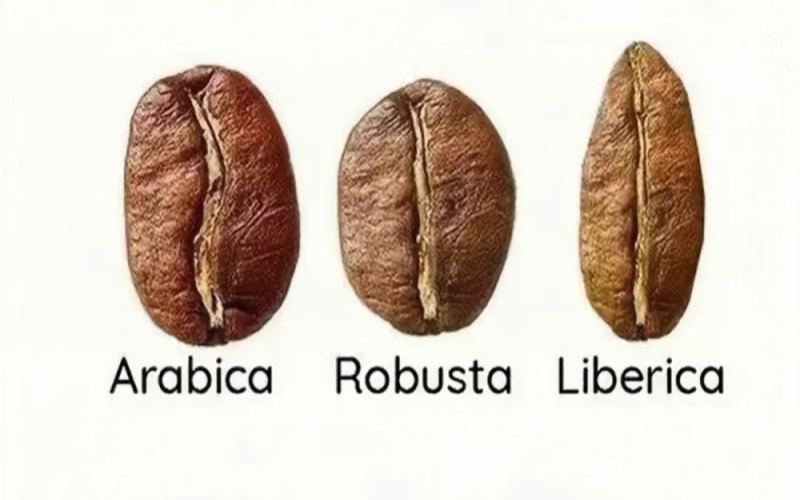
In the world of coffee, Arabica, Robusta, and Liberica make up the three main species. Among them, the smallest in size—Arabica—hides a "giant": Maragogipe, commonly known as Elephant Bean. This variety was discovered in Brazil in 1870, and can grow up to three times the size of ordinary Arabica, even surpassing Liberica. It is actually a mutation of Typica, with a flavor profile featuring sweet berry notes and bright citrus acidity, plus a thick, silky mouthfeel. However, its difficulty to cultivate, long maturation period, and low yield make it uncommon. This article will guide you through the origins and flavor characteristics of Maragogipe, as well as the dual meaning of "Elephant Bean" as both a variety and a grade, while also outlining the three major species of the Coffea genus. [more…]
The Origins and Flavor Characteristics of Nicaragua Maragogype Elephant Bean: A Full Analysis from Variety Origins to Front Street Coffee Brewing
In the Arabica family, there is a member with an exceptionally prominent physique—the Maragogype, whose beans can be up to three times larger than ordinary Arabica. It was first discovered in 1870 in Bahia, Brazil, and later recognized as a natural mutation of Typica. Due to high cultivation costs and management difficulties, the Maragogype's distribution worldwide is quite limited, and Nicaragua's Mama Mina estate is one of the standout producing regions. In this article, Front Street Coffee will guide you through the Maragogype's origin story, variety characteristics, natural processing methods, along with detailed roasting curves and brewing parameters, and finally discuss its connection to Pacamara, giving you a comprehensive understanding of this giant coffee bean's unique charm. [more…]
The Complete Guide to Giant Elephant Bean Coffee: Origins, Growing Conditions, and Flavor Brewing of the Maragogipe Variety
In the Arabica coffee family, there is a particularly large member—the Maragogype. Its scientific name is Maragogipe, and it was first discovered in Brazil in 1870. It was later recognized as a natural mutation of Typica, and its beans can be up to three times the size of ordinary Arabica beans. Due to high cultivation costs and difficult management, the producing areas of Maragogype are now mainly concentrated in a few Latin American countries. From the perspective of Front Street Coffee, this article will systematically introduce the variety origin of Maragogype, suitable growing regions, natural processing methods, roasting and brewing parameters, and its relationship with its hybrid descendant Pacamara, giving you a comprehensive understanding of this "giant" in the coffee world. [more…]
Analysis of the Flavor and Estate Story of Guatemala Santa Felisa Estate Red Pacamara Maragogype K72 Process
Pacamara Maragogipe is a cross between the Pacas and Maragogipe varieties, combining rich flavor with an elegant texture. Guatemala's Santa Felisa Estate, founded in 1904, is located in the Acatenango Valley and is known for its eco-friendly farming methods, eight processing methods, and insistence on hand-picking at 21 degrees Brix, consistently ranking among the top in the COE. The estate weathered the impact of leaf rust, losing its organic certification yet still upholding its ecological philosophy. Its K72 processing method combines repeated fermentation with washed and sun-dried techniques, giving the coffee bright, clean flavors of citrus notes, dried tangerine peel aroma, cherry, and sweet persimmon. Front Street Coffee recommends brewing with a Hario V60, 90°C water temperature, and a three-pour method to showcase this Red Pacamara Maragogipe's lingering sweetness and smooth mouthfeel. [more…]

Nicaragua Maragogype Elephant Bean Flavor Analysis: Central American Specialty Coffee Varietal Characteristics and Front Street Recommendations
Arabica, Robusta, and Liberica make up the three main native species of coffee worldwide, and among them Arabica has the smallest beans, which is why it is often called "small-seed coffee." Yet within the Arabica family, there exists a mutant variety whose beans can grow to three times the size of ordinary Arabica—the Maragogype, also known as the elephant bean. It was first discovered in 1870 in the Maragogipe region of Bahia, Brazil, and was identified as a natural mutation of Typica. The Maragogype plant is tall with lush foliage, and its demands for space and nutrients far exceed those of conventional varieties. Combined with the difficulty of harvesting and the high time cost, very few farmers are willing to grow it. Today it is found only in scattered pockets across Latin American countries such as Brazil, Nicaragua, Mexico, and Guatemala. During its bean-sourcing travels, Front Street Coffee purchased several lots of Maragogype for cupping and concluded that those from Nicaragua performed best, with the sun-dried Maragogype from the Mierisch family's Mama Mina estate standing out in particular for its flavor. This article will walk coffee lovers through the complete picture of the Maragogype and its hybrid offspring Pacamara—from the variety's origins and current state of cultivation to its flavor profile and brewing parameters. [more…]
A Complete Guide to the Pacamara Coffee Variety: From Its Breeding Origins to Growing Characteristics and Flavor Potential
Pacamara is a highly regarded variety in the coffee world, bred from a cross between Pacas and the giant bean Maragogype, combining unique genetics. This variety originated in El Salvador in the 1950s and is now also cultivated in Honduras, Nicaragua, and other places. The Pacamara coffee tree is relatively tall, with wavy leaf edges, and is suitable for cultivation at altitudes of 900 to 1,500 meters, with quality improving at higher elevations. Due to low yields, its cultivation scale has always been limited. In addition to the common variety characteristics, there is also a yellow Pacamara variant. In this article, Front Street Coffee takes you through a comprehensive understanding of Pacamara's origins, botanical characteristics, and key cultivation points. [more…]
Pacamara: How a Salvadoran Hybrid Became a Strong Rival to Geisha, and How It Differs from Sidra and Java
Pacamara is a hybrid variety born in El Salvador in 1958, created by combining two major varieties: Pacas and Maragogype. Although it boasts exceptionally large beans akin to elephant beans, it languished for half a century due to low yield and processing difficulties, until 2007 when it swept the Cup of Excellence double championship and defeated Geisha, earning the title of "Geisha's rival." This article reviews its complex lineage, tumultuous journey, and flavor advantages, and explores whether it surpasses Sidra and Java. Front Street Coffee takes you deep into this legendary variety. [more…]
A Complete Guide to Guatemala's El Injerto Estate Coffee: Pacamara Variety Flavor, Auction Legend, and Origin Background
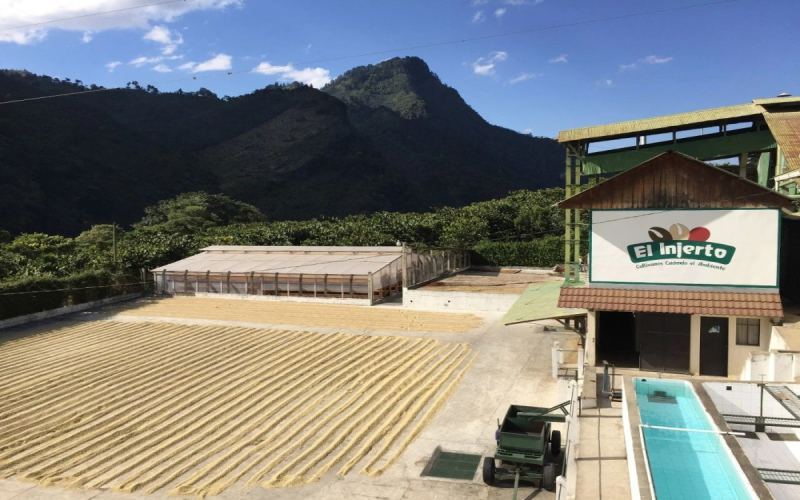
Among the tens of thousands of coffee estates worldwide, some cater to the mass market with commercial beans, while others specialize in top-tier estates focused on specialty and rare varieties. Today, we turn our spotlight to the renowned Incht Manor from Guatemala. Nestled on the famous Huehuetenango Highlands and operated by the Aguirre family since 1900, this estate takes its name from a local fruit. It adheres to organic farming and ecological conservation, holds Rainforest Alliance certification, and has frequently won international coffee competition awards since 2002. Its auction lots once set a world record at $500.5 per pound, with the Pacamara variety comprising only 8% of total production, offering a rich and diverse flavor profile. Front Street Coffee will also integrate this information to outline Incht Manor's varieties, flavors, and regional highlights for enthusiasts. [more…]
Analysis of Flavor Characteristics of the Pacamara Variety in El Salvador's Coffee Regions and the Hot Spring Processing Method
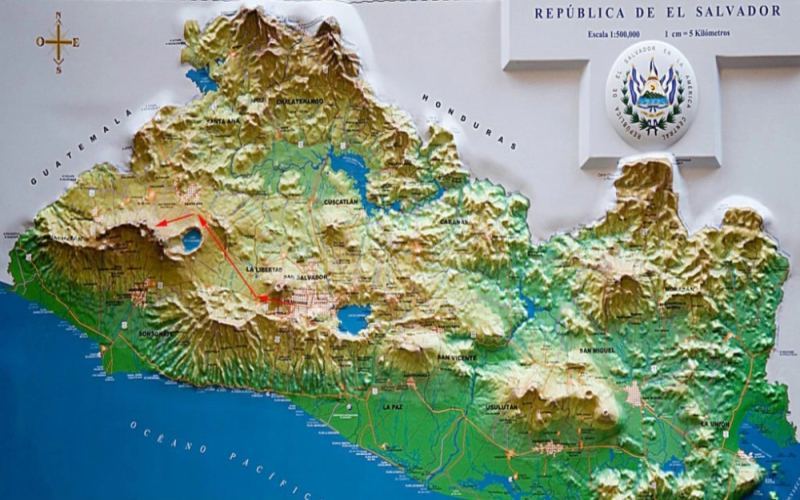
El Salvador is an important coffee-producing country in Central America, known for its exceptionally well-balanced coffee, which is graded according to altitude. This article will guide you through the regional characteristics and grading of Salvadoran coffee, with a focus on the origins and flavor profile of the rare Pacamara variety, as well as the unique process of using natural hot spring water to process green beans. It also reviews the ups and downs of the country's coffee industry under the influence of war and policy, and the changes in exports after the government promoted privatization. The article also mentions related product information recommended by Front Street Coffee. [more…]
Arabica Coffee Bean Flavor Characteristics and Main Subspecies Overview: Analysis of Differences Among Typica, Bourbon, Geisha, and Other Varieties
Arabica accounts for more than seventy percent of global coffee production and is also widely recognized as the coffee species with superior flavor performance. But Arabica is not a single variety; under it there are also many subdivided subspecies such as Typica, Bourbon, and Geisha, each differing in bean shape, flavor, and cultivation characteristics. From the perspective of Front Street Coffee, this article systematically sorts out the basic characteristics of Arabica coffee, its caffeine and sugar content, as well as the appearance and flavor characteristics of major varieties such as Typica, Maragogype, Pacamara, the Bourbon group, and Geisha, helping coffee enthusiasts build a clearer understanding of varieties. [more…]
The Origin and Flavor Characteristics of Nicaragua Maragogype Elephant Bean and Front Street Coffee Roasting and Brewing Guide
In the Arabica family, there is a type of bean whose size far exceeds that of its peers, known as the giant elephant bean, with the scientific name Maragogype. It was first discovered in 1870 in Bahia, Brazil, and was later identified as a natural mutation of Typica, with the bean able to reach three times the size of ordinary Arabica. Due to high cultivation costs and difficult harvesting, elephant beans are scarce in yield and are currently mainly distributed in Brazil, Nicaragua, Mexico, Guatemala, and other places. Among them, the elephant beans produced by the Mama Mina estate under the Mierisch family in Nicaragua have outstanding flavor, with aromas of black berries, dark plums, and citrus peel, and a solid, silky mouthfeel. In this article, Front Street Coffee will guide you through the origin of elephant beans, their regional characteristics, sun-dried processing methods, and share specific roasting curves and brewing parameters, and finally compare them with their hybrid offspring Pacamara. [more…]
An Analysis of Arabica Coffee Bean Flavor Characteristics: From Variety Classification to Comparison with Robusta
Arabica coffee accounts for 70–80% of global coffee production and is widely recognized as the coffee species with superior flavor expression. But Arabica is not a single variety; under it fall many branches such as Typica, Bourbon, and Geisha, each with clear differences in bean shape, flavor, and cultivation characteristics. From the perspective of Front Street Coffee, this article systematically sorts out Arabica coffee's origins and distribution, the characteristics of its caffeine and sugar content, and its core differences from Robusta in price, flavor, disease resistance, and other aspects, and introduces one by one the appearance characteristics and flavor tendencies of subdivided varieties such as Typica, Maragogype, Pacamara, the Bourbon family, and Geisha, helping coffee enthusiasts build a complete framework of variety knowledge. [more…]
Guatemalan Coffee Flavor Analysis: A Complete Guide to Incht Manor's Geisha and Pacamara Varieties
Guatemala, as an important producing country of specialty coffee in Central America, cultivates distinctly styled coffees thanks to its volcanic soil and diverse microclimates. Centering on El Injerto Estate, this article provides an in-depth introduction to the cupping performance of its Ruby Geisha lot EI02-02, the origin and spread of the Geisha variety, the history of El Injerto Estate and its auction system, as well as the origins and glorious track record of the Pacamara variety. At the same time, it brings Front Street Coffee's roasting recommendations for two Guatemalan beans, Huehuetenango and Flor del Café, along with V60 three-pour brewing parameters, helping coffee lovers gain a comprehensive understanding of the taste characteristics and producing-region stories of Guatemalan coffee. [more…]
A Complete Guide to the Flavor and Brewing Knowledge of Geisha and Pacamara Coffee Varieties from El Injerto Estate in Guatemala
Guatemala, as an important origin of specialty coffee in Central America, produces coffee beans with distinctive character thanks to its volcanic soil and diverse microclimates. This article focuses on El Injerto Estate, providing a detailed introduction to the variety origin, estate history, cupping flavors, and award records of its Ruby Geisha coffee, and further explains the spread of the Geisha variety, the background of Pacamara's creation, as well as El Injerto Estate's self-organized auction and unique processing methods. It also includes Front Street Coffee's roasting recommendations for Guatemalan coffee and V60 three-pour brewing parameters, helping coffee enthusiasts gain a comprehensive understanding of the flavor charm of this producing region. [more…]
Global Major Coffee Varieties Flavor Guide: An Analysis of Regional Performance from Geisha to Catuai
The same coffee variety, when grown in different countries and regions, often develops a drastically different flavor profile in the cup. This article sorts through the specific flavor expressions of major varieties such as Geisha, Typica, Bourbon, Maragogipe, Kent, Pacas, Pacamara, SL28, SL34, Mundo Novo, and Catuai in places including Panama, Costa Rica, Colombia, Guatemala, Peru, Honduras, Mexico, Brazil, Nicaragua, Tanzania, India, El Salvador, and Kenya. Whether you want to understand Geisha's floral and citrus lineage or clarify Bourbon's chocolate-caramel undertones, this correspondence between varieties and regions can provide an intuitive reference. Front Street Coffee also suggests that in actual brewing, you should make a comprehensive judgment based on roast level and processing method to more accurately reproduce these flavor descriptions. [more…]
Origins of the Pacamara Coffee Variety, Flavor Differences Across Producing Regions, and Front Street Brewing Parameters Explained
Pacamara is a hybrid variety that originated in El Salvador in 1958, produced by crossing the Bourbon variant Pacas with the Maragogipe (elephant bean). It combines a large bean size, bright acidity, and full-bodied sweetness. This article will outline the breeding history and physical characteristics of this variety, compare the flavor differences of Pacamara from three producing regions—Guatemala, Nicaragua, and El Salvador—and share Front Street Coffee's V60 brewing parameters and flavor performance, helping coffee enthusiasts gain a comprehensive understanding of this star bean variety that has frequently appeared in cupping competitions in recent years. [more…]
Coffee Encyclopedia: From Typica to Bourbon, Tracing the Genetic Evolution and Flavor Differences of Ancient Coffee Varieties
The coffee world boasts a vast array of varieties, but what truly laid the foundation for specialty coffee are those ancient native species and their derived mutations. Starting from the classic SCAA classification, this article traces the origins of the two foundational varieties, Typica and Bourbon, along with their representative descendants born from natural mutations and artificial hybridization—from Pointed Bourbon, Maragogipe, and Geisha, to Caturra, Pacas, Pacamara, and more. The article not only introduces the bean characteristics, flavor profiles, and cultivation traits of each variety, but also reveals the inseparable relationship between genetic mutations and regional conditions, helping coffee enthusiasts build a systematic understanding of coffee varieties. [more…]
A Comprehensive Analysis of the Definition of Specialty Coffee and the Main Cultivated Varieties of Arabica
Specialty coffee is centered on carefully cultivated high-altitude Arabica, and its varietal system originates from two ancient bloodlines: Typica from Ethiopia and Bourbon from Yemen. This article systematically outlines the definition of specialty coffee and provides a detailed classification of major Arabica varieties, including Typica, Bourbon and their genetic mutations, intraspecific hybrids, and interspecific hybrids. It covers varieties such as Bourbon Pointu, Maragogipe, Geisha, SL28, Caturra, and Pacamara, while also explaining the position of hybrid varieties in specialty coffee and the key influence of producing estates on flavor differences. [more…]